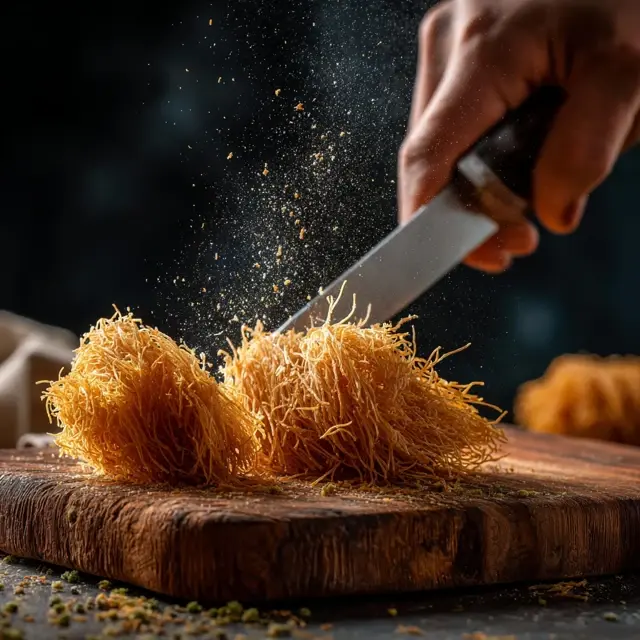
How to Cut Kataifi Strands for Precise Shaping
Kataifi’s fine strands give it its distinctive texture and versatility, but they can also be challenging to manage. Cutting kataifi correctly is essential for shaping it into consistent rolls, nests, or cups. With the right tools and techniques, you can achieve professional-level precision that elevates both presentation and flavor.
Why Cutting Kataifi Strands Matters
Even strand lengths ensure kataifi bakes evenly and holds its shape. Uneven or tangled cuts can lead to lopsided rolls, clumsy nests, or inconsistent cups. Proper cutting allows for better control over portion sizes and aesthetic presentation.
Tools You’ll Need
- Sharp kitchen scissors: Ideal for trimming strands to desired lengths.
- Chef’s knife: Perfect for slicing through larger portions of kataifi dough.
- Cutting board: Provides a flat surface to keep strands aligned.
- Pastry brush: Useful after cutting to tidy and separate strands.
Step-by-Step Guide to Cutting Kataifi
1. Thaw Properly
If kataifi is frozen, let it thaw fully at room temperature. Trying to cut frozen strands leads to breakage and uneven pieces.
2. Separate Before Cutting
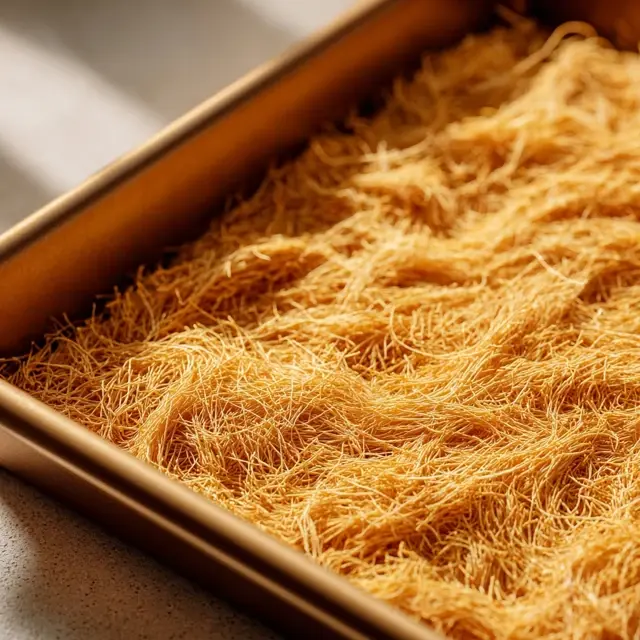
Gently loosen the strands with your fingers to remove clumps. This prevents uneven lengths when cutting.
3. Measure and Trim
Decide on the shape you’re aiming for:
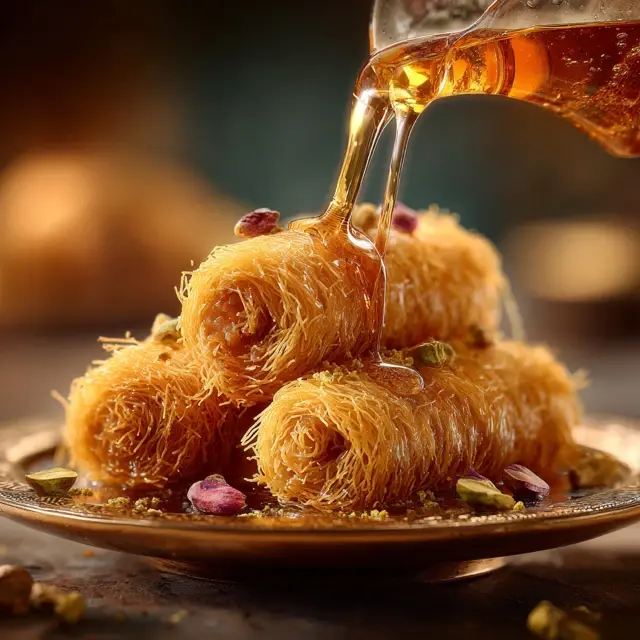
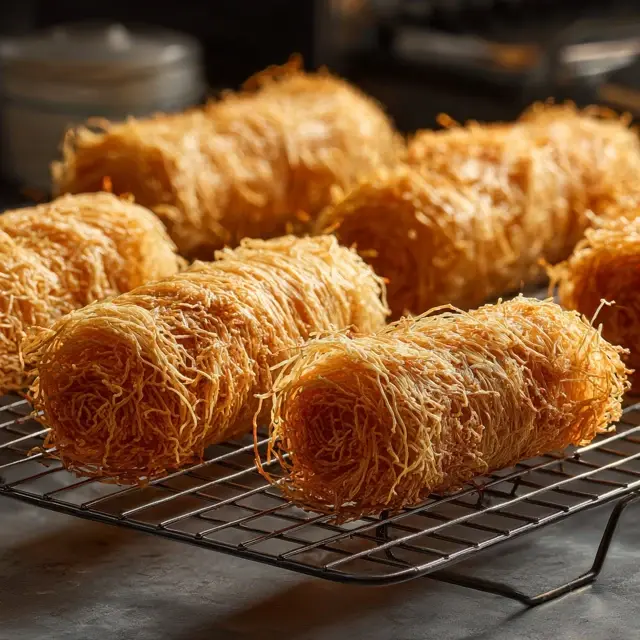
- Rolls: Cut strands into 6–8 inch sections for manageable portions.
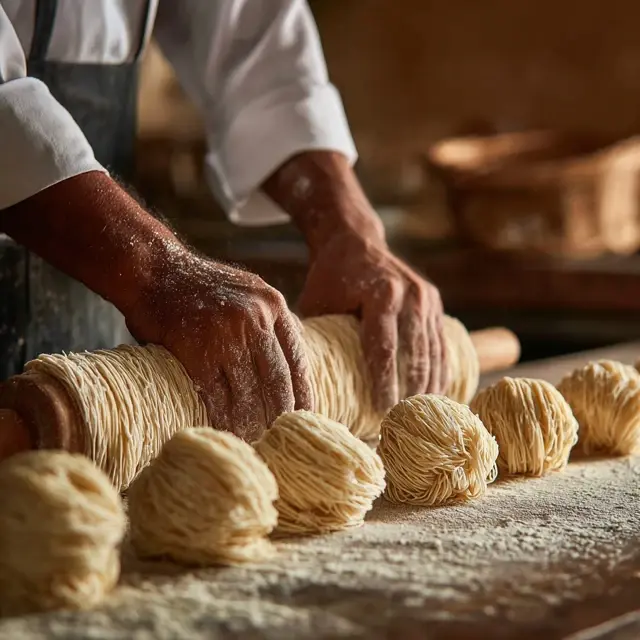
- Nests: Shorter 4–5 inch pieces work best for creating compact circles.
- Cups: Cut strands into smaller clusters that fit neatly into muffin tins.
4. Use a Clean Cut
Always use sharp scissors or a knife to make clean cuts. Avoid tearing strands, which can create uneven edges.
Tips for Precision and Control
- Keep a damp towel over unused dough to prevent drying while you cut.
- Work with small sections instead of the entire batch at once.
- After cutting, fluff strands lightly to prevent compacting during shaping.
Common Mistakes to Avoid
- Overcutting: Strands that are too short won’t hold fillings well.
- Uneven lengths: Leads to inconsistent baking and uneven rolls.
- Forgetting to cover dough: Dry strands are brittle and hard to shape.
Final Thoughts
Cutting kataifi strands with precision sets the foundation for beautiful and delicious creations. Whether you’re making elegant rolls or playful nests, proper cutting techniques ensure consistency and elevate presentation. For more insights on professional handling, explore our kataifi cooking techniques guide.